


ChambApp: Job Search in NY
4.7198.00 Reviews
App Specs
- Version
- 3.5.1
- Updated On
- License
- Free
- Downloads
- 50,000+
- Developer
- Ollin Systems
- Categories
- Business
- Platform
- Android
Screenshots

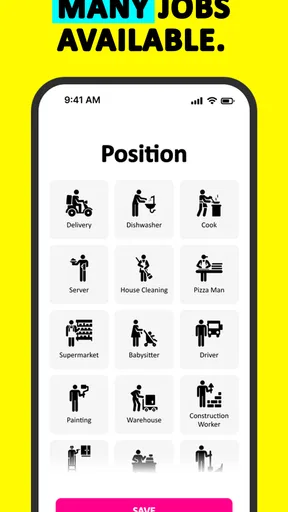
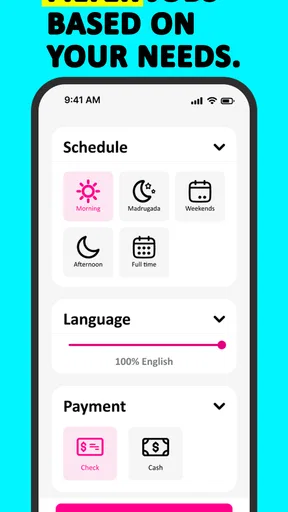
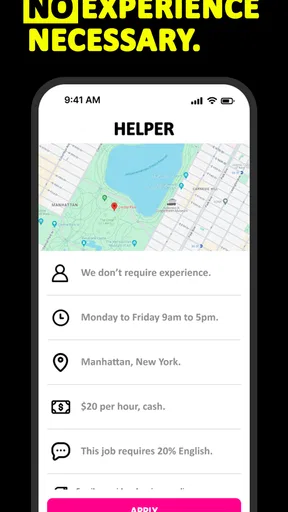
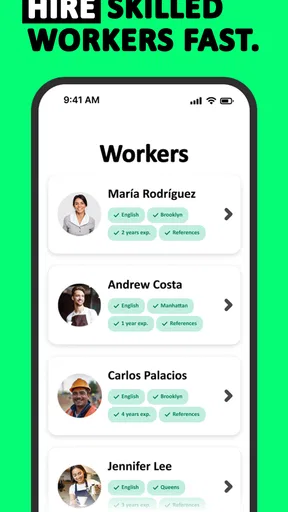
 Analysis by AppCompare
Finding work in New York can feel like a job in itself. Open positions are scattered across different channels, requirements are not always clear, and a promising lead can disappear under a pile of unrelated listings. I approached ChambApp as a practical tool for people who want a more focused way to look for work in the city, rather than as a replacement for every major employment platform.
That distinction matters. This is a free business app from Ollin Systems, aimed specifically at the working class in New York. Its narrow focus is its main reason to try it, but it also determines who will benefit most. If you want a broad professional network, polished résumé tools, or a worldwide job database, another service may suit you better. If your priority is finding relevant local opportunities without wading through a huge general-purpose marketplace, this app deserves a closer look.
What I looked for before recommending it
My first question with any job-search app is not how many buttons it has. I want to know whether it helps me make a better decision about where to spend my time. A useful employment app should reduce irrelevant searching, make opportunities understandable, and help a person move from interest to action without unnecessary friction.
For this particular app, location is the central decision point. A New York-focused service can be more useful than a giant platform when the user is looking for work in a specific local environment. Someone searching for nearby service work, hourly employment, or other practical opportunities may prefer a smaller pool that feels connected to the city over a massive list filled with positions that are too far away or poorly matched.
I would also judge it by how well it fits into a realistic routine. Many people search for work between shifts, during a commute, or from a phone with limited time. That makes clarity more valuable than decorative design. The app needs to be easy to return to, quick to understand, and focused enough that checking it does not become another exhausting task.
There is also a trust question. A job listing is not just content to browse; it can affect transportation costs, childcare planning, interview preparation, and income expectations. I would not treat any listing service as a guarantee of employment. Instead, I use it as one part of a process: find a lead, inspect the details carefully, verify the employer through sensible channels, and then apply or make contact when the opportunity fits.
A local focus changes the search experience
The strongest idea behind ChambApp is that it is built around New York rather than trying to serve everyone everywhere. That can make the search feel more relevant from the first moment. A general app may present hundreds of results, but quantity is not automatically helpful when many of those results are outside the area, aimed at a different type of worker, or written for a corporate audience.
Worth Reading Before You Choose

Flipboard Shows What News Apps Must Do Beyond the Feed

Switching to Android Auto Means Rethinking Your Driving Routine

Google Calendar Makes a Crowded Week Easier to Manage

Ludo King Makes the Most of the Minutes Between Plans

Baby Panda World Brings Quick Play to Modern Phones, but Its Game Library Feels Busy

ESPN’s Live Game View Makes Following Close Games Easier
For a person who already knows the city or has a clear plan to work there, this focus can reduce mental clutter. I like the idea of opening a job app with a local purpose instead of having to repeatedly filter out opportunities that do not fit the geography or the kind of work I want.
Still, a local focus is not the same as a guaranteed match. New York is a large and varied labor market. A user in one borough may have very different commuting limits from someone in another, and a position that looks local on paper may still be inconvenient in practice. I would always compare the location with the actual travel time, especially for jobs with early starts, late finishes, or changing schedules.
Who is most likely to benefit
I see the best fit in people who want a straightforward place to begin a local job search. That includes workers changing jobs, people returning to employment, newcomers trying to understand the city’s opportunities, and anyone who feels overwhelmed by broad platforms designed around office careers or professional networking.
It may also help someone who does not want to build a public professional profile just to look for work. Some employment services place a lot of emphasis on résumés, networking, endorsements, and long-term career branding. Those tools can be useful, but they are not what every worker needs. A focused local job app can feel more direct when the immediate goal is to identify a realistic opening and pursue it.
I would be more cautious about recommending it as the only tool for a highly specialized search. If you are looking for a senior technical role, a regulated profession, academic employment, or a position outside New York, a specialist board or a broader professional service will probably give you better coverage. The right choice depends on whether local relevance matters more than breadth.
How I would use it during an ordinary week
Imagine a worker finishing an afternoon shift and wanting to move into a job with a better schedule. Instead of spending the evening searching every possible employment site, I would use ChambApp for a first local pass. I would note the positions that seem compatible with the person’s travel range, experience, and availability, then make a short list rather than applying to everything.
The useful habit here is to separate discovery from commitment. On the first pass, I would collect only realistic leads. On the second, I would check the employer, location, duties, schedule, and application instructions. This prevents the common mistake of treating an attractive title as enough information to justify an application.
I would also keep a simple application record outside the app: the position, date of contact, name of the employer, and next step. That small workflow is especially valuable when using a focused service, because it lets the app do what it is best at—helping discover local opportunities—while another simple note or calendar handles follow-up.
A second practical use is comparing nearby options before accepting an interview. A job that pays more may require a longer commute or create extra transportation costs. A local search tool is most useful when I treat proximity as one factor in the decision, not as proof that the job is automatically better.
Small habits that improve the results
One non-obvious advantage of a focused app is that it encourages a narrower search strategy. Rather than repeatedly refreshing a huge list, I would check at consistent times and review new possibilities with a clear set of criteria. For example, I would decide in advance what travel time, work schedule, and minimum responsibilities are acceptable. That keeps the search from becoming an emotional reaction to every new listing.
I would also read the entire opportunity before preparing an application. Local employment listings can use familiar job titles for very different day-to-day duties. A position that sounds like a good match may involve physical work, customer contact, variable hours, or responsibilities that are not obvious from the title. Taking a few extra minutes at this stage can save much more time later.
Another useful trade-off is application volume. A broad platform may encourage sending many applications quickly, while a more targeted local tool is better suited to a shorter list of stronger matches. I would rather prepare a clear, relevant application for a realistic opportunity than send the same generic message to dozens of unsuitable positions.
Finally, I would treat the app as a starting point for verification. Before sharing sensitive personal information or traveling to an interview, I would confirm the employer and the meeting details through appropriate, independent means. That is not a criticism unique to this app; it is a sensible rule for every online job-search service.
What the app does well as a business tool
Its clearest strength is focus. The app sits in the business category, but it does not feel like a general business utility aimed at managers or companies. Its purpose is much closer to helping workers navigate a local employment search. That makes the experience easier to understand than platforms that combine jobs with networking, news, training, recruiting tools, and professional identity features.
The free entry point is another practical advantage. Someone who is unemployed or carefully managing expenses can try the service without paying an upfront subscription. That lowers the risk of testing whether its local approach fits a particular search.
At the same time, free does not necessarily mean every part of the experience is unlimited. The app includes optional in-app purchases priced from $2.99 to $4.99 per item. I would therefore begin with the free experience and only consider a purchase after understanding exactly what it adds and whether it improves my own search. A paid extra is worthwhile only when it saves meaningful time or solves a problem I actually have.
The app has reached more than 50,000 installs and holds a 4.7 average from around 2,700 ratings, which suggests that many users have found value in the concept. I do not read those figures as a promise that every listing or search will work for everyone. They are better understood as a sign that the local employment idea has attracted a real audience.
Where a broader alternative may be better
The usual alternatives in this category divide into a few groups. Large job boards are better when maximum coverage matters. Professional networking services are better when reputation, contacts, and career identity are central to the search. Staffing agencies or direct employer pages can be better when a person wants a more guided process or a particular company.
ChambApp is not automatically superior to those options. Its advantage is concentration, not universal reach. If I were searching across several states, comparing remote roles, or targeting a narrow professional specialty, I would add a broad platform rather than rely on a New York-centered service. If I needed résumé construction, interview preparation, or networking conversations, I would look elsewhere for those specific functions.
There is also a trade-off between simplicity and depth. A focused app can make discovery less tiring, but a larger service may offer more sorting tools, employer information, application tracking, or career resources. I would not choose between them based only on which interface feels cleaner. I would choose according to the stage of the search: local discovery first, deeper professional research where necessary.
For someone already employed and looking quietly for a major career move, the broader alternative may be more appropriate. That person may need confidentiality, detailed company research, salary comparisons, and a strong professional profile. For someone who mainly wants to see what practical work is available in New York, those extra layers may create more work than value.
Compatibility, access, and the cost of changing tools
The current version is 3.5.1, and the app runs on Android 7.0 or later. That makes it accessible to people using older Android devices, although anyone with an older phone should still expect the experience to depend on the device’s general performance and available storage. I would install it on the phone I actually use for job searching, because notifications, battery life, and typing comfort matter more than specifications alone.
The age rating is Everyone, so the app is positioned for a broad audience rather than a restricted adult-only group. That does not remove the need for judgment when dealing with employers or sharing personal information. A general audience rating describes access suitability, not the quality or safety of every opportunity a user may encounter.
Switching to this app is relatively easy if it complements an existing search. I would not delete a trusted job board immediately. Instead, I would use ChambApp for local discovery while keeping the other service for broader searches, professional roles, or application records. After several search sessions, I could decide whether the focused approach is producing enough relevant leads to justify making it a primary tool.
The main cost of switching is not money; it is attention. Every additional job app can create duplicate applications, repeated profile updates, and scattered follow-ups. To avoid that, I would assign each service a clear role. One app can handle New York-focused discovery, another can cover wider opportunities, and a simple personal record can show where I have already applied. That division is more useful than expecting one app to manage the entire process.
Limitations I would keep in mind
The local emphasis can become a limitation when a user’s plans change. If I move away from New York, work remotely, or begin searching in another region, the app’s main advantage becomes less relevant. Even while staying in the city, a person with a very specific professional target may find the selection too narrow compared with specialist resources.
I would also avoid assuming that a focused app eliminates the need for careful reading. Local relevance can make a listing feel promising before I have checked the schedule, duties, commute, and application requirements. The app may save search time, but it cannot make a poor-fit job become a good one.
The optional purchases deserve a measured approach as well. Because the app is free to start but offers items in the $2.99-to-$4.99 range, I would not spend simply because a paid option is visible. I would first use the basic experience, identify the exact obstacle, and then decide whether the purchase addresses it. Users who want a completely feature-unlocked experience with no additional spending may prefer a different model.
Another limitation is strategic rather than technical: no job-search app should be the sole source of truth. Employer websites, referrals, local organizations, and direct conversations can reveal opportunities that any app misses. I see this product as one channel in a broader search, not as a substitute for personal judgment or a complete employment service.
My recommendation for different kinds of users
I recommend giving ChambApp a try if you are looking for work in New York and want a focused, low-risk way to begin. The free starting point makes experimentation sensible, and the local purpose gives it a clear identity. I would especially consider it for workers who feel that large employment platforms show too much unrelated material or assume a professional background that does not match their needs.
I would use it alongside a broader service if I needed more coverage, specialist roles, or professional networking. That combination is stronger than forcing one app to handle every part of a job search. Use this one to discover relevant local possibilities, then use independent research and careful follow-up before applying or attending an interview.
I would skip it as a primary tool if I am searching outside New York, pursuing a highly specialized career, or expecting comprehensive résumé and career-management features. In those situations, the app’s focused identity is more likely to feel restrictive than helpful.
Overall, I like the decision it encourages: start with relevance instead of volume. The app is not a magic shortcut to employment, and I would not judge it by the size of a general job database. I judge it by whether it helps a New York worker spend less time filtering and more time considering realistic opportunities. On that narrower question, ChambApp is worth trying as a local job-search companion, especially when used thoughtfully rather than as the only place to look.
Pros
- Focused on finding jobs and services across New York.
- Useful for discovering local opportunities in one place.
- Simple concept that is easy for first-time job seekers.
- Can help users explore work beyond traditional job boards.
- Convenient for people seeking employment within NY communities.
Cons
- The selection may be limited compared with major job platforms.
- Some listings may require careful verification before applying.
- Results can vary significantly by borough and job category.
- Not ideal for users searching outside New York.
- App usefulness depends heavily on how frequently listings are updated.
FAQs for ChambApp: Job Search in NY
What is ChambApp: Job Search in NY?
ChambApp: Job Search in NY is a mobile platform designed to help people discover employment opportunities in New York. It can connect job seekers with available positions, employers, and useful career information. Before downloading, users should understand that the quality and number of listings may depend on their location, professional profile, current vacancies, and how frequently employers update their posts.
How do I search and apply for jobs through ChambApp?
After creating or completing a profile, users can generally browse available vacancies using categories, keywords, location, or other filters. A listing may include information about the employer, responsibilities, requirements, and application instructions. Depending on the position, ChambApp may redirect applicants to an external website, request a résumé, or provide an in-app contact option, so the application process can vary.
Is ChambApp suitable for all types of workers in New York?
The app may be useful for job seekers with different levels of experience, including people looking for entry-level roles, part-time work, full-time employment, or career changes. However, the available opportunities depend on the current listings and the neighborhoods or industries covered by the service. Users should carefully check language requirements, schedules, transportation needs, qualifications, and work authorization before applying.
Does ChambApp guarantee employment or verify every job listing?
No job-search application can guarantee that a user will be hired, and downloading ChambApp should not be considered a promise of employment. Listings may come from different employers or recruiting sources, so applicants should review each opportunity carefully and confirm important details directly with the company. Never pay money to obtain a job, and avoid sharing sensitive personal information unnecessarily.
What should I check before downloading and using ChambApp?
Before installing ChambApp, review its current store rating, permissions, privacy policy, subscription or payment information, and account requirements. Check whether the app is compatible with your Android or iOS device and whether its services are available in your area of New York. It is also wise to prepare an updated résumé and use a professional email address when contacting potential employers.


